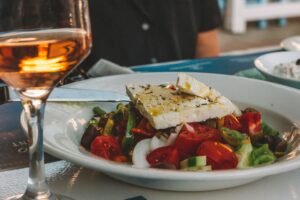
Mediterranean food plates

Learn How to Conquer your Depression with the Mediterranean Diet

Mediterranean food is one of the healthiest foods you can eat for your overall physical and mental health. It is considered part of an antiinflammatory diet. Mediterranean food consists of nutritious whole food vegetables, legumes, healthy fats and proteins. These foods have been a staple for thousands of years and many of the longest living, healthiest people live in this region. Science is showing that an antiinflammatory diet can greatly reduce depression and anxiety and brain fog/cognitive functioning.

What makes up a Mediterranean Diet?

A Mediterranean diet is full of fresh fruits and vegetables such as vine ripened tomatoes, dark leafy greens like arugula and spinach, cucumbers, zucchini, eggplant, peppers, lemons, garlic and onions. Healthy nuts and seeds and good fats and proteins such as olives, olive oil, fish and grass fed organic meats. In addition, they have whole grains such as farro, bulgar wheat, cous cous, barley, buckwheat and millet. They also eat fiber filled legumes such as cannellini beans, garbanzo beans and lentils. In addition there is organic grass fed dairy with lots of good enzymes and bacteria in the yogurts and kefirs and aged meats and cheeses. These bacteria and fiber in these foods feed the gut microbiome where 90% of the neurotransmitters, such as GABA, serotonin and dopamine which regulate your mood are made.

The standard Western diet consists of ultra processed foods that lack fiber, vitamins and minerals. It is high in refined carbohydrates, sugar and seed oils which are highly inflammatory. A diet that is low in fiber cannot feed the gut microbiome. This leads to leaky gut, high inflammation and low immune function. When this happens, our body tries to protect itself against the inflammation and disease happens. This can lead to all of the chronic diseases and mental illnesses we see in society today.

What can you do to change your diet?

It’s hard to make lasting changes in your diet and healthy food is expensive and takes time to make. Processed foods and fast food are quick and convenient and our schedules are becoming busier by the day. This is true, however, when you don’t feel good, either mentally or physically, you will be forced to slow down and medications and doctor’s visits are even more expensive. The trillions of bacteria in your gut that make up your gut microbiome feed off of fiber. What is fiber? All the foods that God provided for us in nature; nuts, seeds, legumes, grains, vegetables, herbs and fruits. There are hundreds, if not thousands, of varieties of each of these categories and each one provides food for a different bacteria. Try to experiment with adding different fibrous foods to your meals? The more variety, the happier the gut bacteria and the healthier you become. 

  •  Add some blueberries and raspberries to your breakfast along with a variety of nuts and ground flax seed or chia seeds to your oatmeal.
  •  Keep a bowl of mixed nuts (dry roasted with sea salt) on your counter for a snack. 
  •  Keep a container with a variety of cut up veges in your fridge such as cucumbers, carrots, radishes, snap peas, mini peppers and celery.
  • Make homemade hummus to dip your veges in
  • Try making a bowl of lentil soup or vegetable soup with a variety of veges
  • Make a big salad with a variety of dark green leafy veges and chopped up veges, topped with pumpkin seeds and ground flax seeds.

There are so many ways to add fiber to your diet.

Healthy fats make you feel more satiated, provide energy for your brain and are a source of essential fatty acids, which the body cannot make itself. In addition, fat helps you absorb necessary vitamins such as Vitamins D, A, and E. What are some healthy fats you can add to your diet? Avocado, olives, olive oil, coconut and coconut oil and grass fed organic butter and cream.

The other day I was inspired to make a huge Mediterranean meal for my family. I made homemade hummus, babaganoush, lentils, greek salad, chicken shawarma and rice pilaf (ok so you have to have a little carbs every once in awhile but it was made with plenty of grass fed butter and olive oil, to slow the absorption of the glucose). Although you may not have 5 hours to commit to making all of these recipes at once, they are easy on their own and worth experimenting with. Each ingredient, including the spices and even the salt, is high in nutrients and flavor. 

Here are the recipes I used for my incredibly healthy and tasty Mediterranean cuisine:

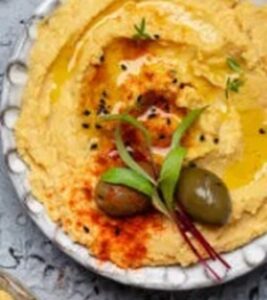
Delicious Homemade Hummus Recipe

Prep Time: 10 min Cook Time: 10 min Servings: Yield: 2 1/2 Source: mygreekdish.com

Ingredients

Basic 2-step super easy hummus recipe

400g boiled or canned chickpeas (14 oz.)

3 tbsps tahini

juice of 1 large lemon

4 tbsps extra virgin olive oil

4 cloves of garlic, minced

1/2– 1 tsp salt

1/2 tsp ground cumin

2 tbsps water

a pinch of paprika for garnish

Directions

Basic 2-step super easy hummus recipe

When making a homemade hummus recipe, what really makes a difference is the order that you add the ingredients.

For this hummus recipe, start by adding the tahini and lemon juice in a food processor or blender and pulse for about 1 minute, until thick and light in colour. Then the chickpeas go in. Process the mixture, until the chickpeas are minced.

Lots of hummus recipes require to remove the skins from the chickpeas. Although this is not difficult it will certainly take some more time, but the truth is, having tested both ways, I am not sure that it is worth the trouble. If you have the time try it for yourself by gently pinching the chickpeas until the skin comes off.

Add the minced garlic and pour in the olive oil a little bit at a time, whilst pulsing, like making mayonnaise. Blend until the oil is incorporated and the hummus mixture is smooth or coarsely pureed, depending on your preference.

Season with salt and cumin and pour in 1-2 tbsps water, if the hummus is too thick. Pulse for 1 more minute. Done!

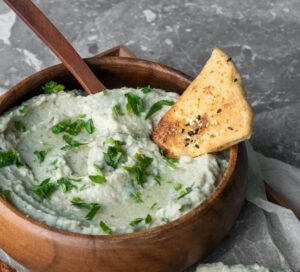
Baba Ghanouj Recipe

Prep Time: 10 min Cook Time: 30 min Servings: 4 Source: Mamaslebanesekitchen.com

Ingredients

1 eggplant

2 cloves garlic

2 ounces (4Tbsp) fresh lemon juice

2 tablespoons tahini

1/2 bunch parsley, leaves only

Salt and pepper

Directions

1. Roast the eggplant in the oven on medium heat, or on a BBQ grill for about 30 minutes.

2. While eggplant is still hot (not too hot so you don’t burn your hands), peel it and discard as much as possible of its seeds.

3. Strain the water from the eggplant by placing them on a colander for about 10 minutes. This step is important so you don’t get a liquid Baba Ghannouj.

4. Add eggplant and all ingredients in a food processor and let run for 2-3 minutes until you get a paste.

5. Place Baba Ghanouj paste into a serving plate, garnish with any/all of the following: olive oil, chopped parsley, sumac spice or chili powder, salted pickles…etc

6. Serve cold as an appetizer, with a side of Pita bread

*Notes: I pull the eggplant off of the BBQ when it looks slightly charred. I never strain the eggplant and I find the texture perfect.

Greek Salad


3 tomatoes, cut into wedges

1 medium red onion, sliced into rings

1 cucumber, pilled and sliced into thick half-moons

1 green pepper, sliced

16 black olives

200g block feta cheese (7 ounces)

1 tbsp red wine vinegar

1/4 cup (4Tbsp) extra virgin olive oil

1 teaspoon dried oregano

sea salt

Directions

The secret to making a delicious Greek salad is in the ingredients: juicy tomatoes, crisp cucumber, creamy feta cheese, good quality extra virgin olive oil and some tangy black olives will really make a difference.

To make this Greek salad recipe (Horiatiki), start by preparing your vegetables. Wash thoroughly and strain the vegetables. Cut the tomatoes into wedges, slice the onion into thin rings, cut the cucumber in thick slices and place everything in a large bowl. Don’t forget to add the olives as well.

Season with salt and pour over the extra virgin olive oil and vinegar.

Toss everything together, so that the flavours mix. Be careful not to add too much salt, as the feta cheese and the olives are salty enough.

Greek salad (Horiatiki) is always served with feta cheese on top, a drizzle of olive oil and dried oregano.

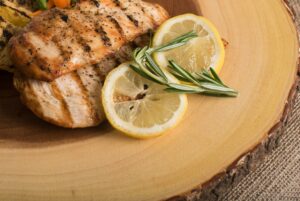
Grilled Chicken Shawarma

Prep Time: 30 mins Cook Time: 15 mins Servings: Yield: 6 category: chicken Source: feastingathome.com

Ingredients

2 lbs to 2 ¼ lb chicken thighs (boneless and skinless, or skin on- see notes)

Shawarma Marinade:

2 tablespoons ground cumin

2 tablespoons ground coriander

8 garlic cloves, minced

2 teaspoons kosher salt

6 tablespoons olive oil

1/4 teaspoon cayenne pepper

2 teaspoon turmeric

1 teaspoon ground ginger

1 teaspoon ground black pepper

2 teaspoon allspice

Directions

Place all marinade ingredients in a bowl and mix, or pulse in a food processor to make a paste.

Rub chicken on all sides with the marinade and let sit 20 minutes (or up to 24-48 hours refrigerated). You can also cut chicken into 1-inch cubes and make skewers.

Grill chicken on a pre-heated Grill, on medium-high heat, closing the lid to the BBQ, until all sides have nice grill marks, about 8 minutes each side. Move to a cooler part of the grill or finish cooking chicken in a 350 F oven until cooked all the way through, about 10 minutes. (Alternatively, you can bake the chicken thighs in a 375 F oven for 30-40 minutes)

Lemony Greek Rice Pilaf (Pilafi) Recipe with Chicken Thighs

Prep Time: 5 min Cook Time: 20 min Servings: 4 portions 1x Source: Mygreekdish.com

Ingredients

8 chicken thighs, bone-in and skin on

1 1/2 cup rice (long grain rice or basmati)

2 tbsps butter

1 small red onion, roughly chopped

3 cups chicken stock

juice of 1 lemon (or more if you prefer)

6–7 peppercorns

salt and freshly ground pepper

2–3 tbsps olive oil

150g/5 oz. feta cheese for garnish (optional)

Directions

To prepare this Greek rice pilaf recipe with chicken thighs, start by washing thoroughly the chicken thighs and pat them dry with some kitchen paper. Drizzle the chicken thighs with olive oil, season well with salt and pepper and rub using your hands.

Heat a large pan over medium high heat and place the chicken thighs inside. Let them colour and cook for about 6 minutes on each side, until the skin is nicely coloured and crispy. Remove the chicken thighs from the pan and set side.

Now it’s time to prepare the Greek rice pilaf. In the same pan add 1-2 tbsps olive oil and the chopped onions and sauté until soft.

Add the butter and rice and sauté the rice until translucent.

Pour in the chicken stock and lemon juice and deglaze.

Add the chicken thighs (skin side up) and season well with salt and pepper.

Place the lid on, turn the heat down and simmer the Greek rice pilaf for about 15 minutes, until the chicken and rice are cooked and all the liquid has been absorbed.

Finish off the Greek rice pilaf with a last minute squeeze of lemon juice, crumbled feta cheese and freshly ground pepper. 

I hope that you enjoy experimenting with the incredibly flavourful, healthy and delicious, anti-inflammatory foods of the Mediterranean and that soon, your mood will lift. When your gut microbiome is happy, you will be happy!